


Timing Belt Replacement in Queen Creek, AZ: When Should You Replace It?
Most drivers know their timing belt or chain won’t last forever, but exactly when should you replace it?
For timing belts, the rule of thumb is every 60,000 to 100,000 miles. Timing chains typically last longer, often 150,000 miles or more, but both can fail if neglected. Heat, driving habits, and your specific vehicle all play a role.
In this guide, the experts at APA Total Car Care in Queen Creek, AZ, explain the key differences between belts and chains, the warning signs to watch for, how Arizona driving conditions affect their lifespan, and what happens if you wait too long.
By the end, you’ll know when to take action and how trusted local service can help you avoid costly engine damage.
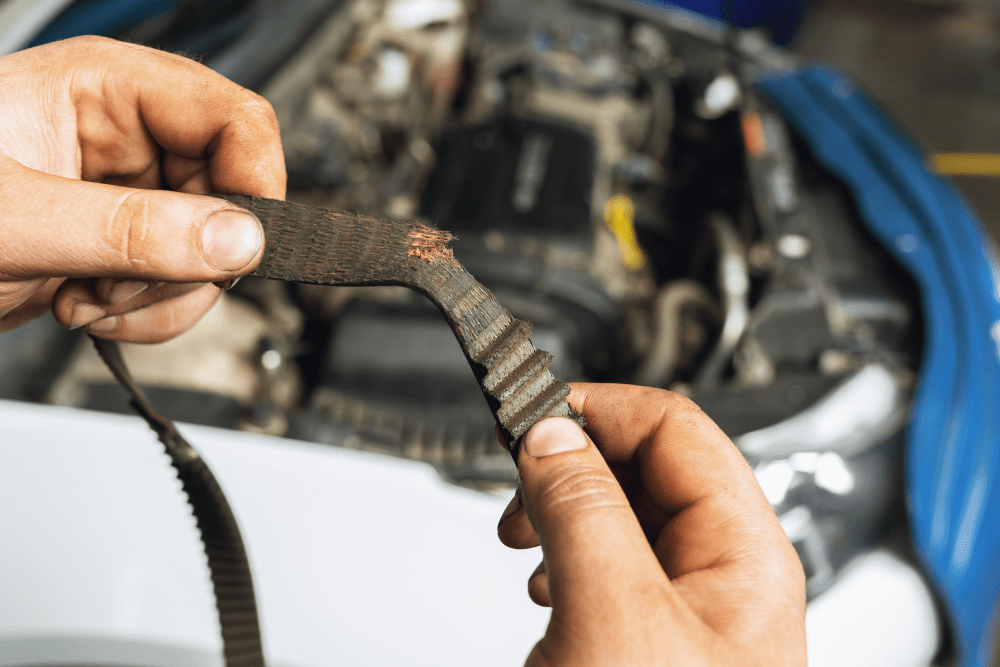
What Exactly Does a Timing Belt or Timing Chain Do?
Your engine is a precise machine. Inside, pistons and valves move thousands of times per minute in carefully timed sequences. The timing belt or chain connects the crankshaft and camshaft, ensuring everything operates in perfect sync to keep your engine running smoothly.
If that connection slips or breaks, the pistons and valves collide, which can:
- Bend or break valves
- Damage pistons beyond repair
- Cause catastrophic engine failure
So, even though it’s hidden away under covers, the timing system is one of the most essential parts of your vehicle.
Timing Belt vs. Timing Chain: Which Does My Car Have?
This is one of the most common questions drivers ask. While both serve the same purpose, they look, feel, and wear differently.
| Feature | Timing Belt | Timing Chain |
|---|---|---|
| Material | Reinforced rubber with teeth | Metal links, similar to a bike chain |
| Average Lifespan | 60,000–100,000 miles | 150,000+ miles with proper oil care |
| Cost to Replace | Lower upfront | Higher upfront |
| Noise Level | Quieter | Louder, especially if worn |
| Common Issues | Cracks, fraying, broken teeth | Stretching, rattling, and oil-related wear |
| Failure Risk | Breaks suddenly, immediate damage | Gradual wear, but still a severe risk |
If you’re not sure which your car has, don’t guess. Our team at APA Total Car Care can identify it during an inspection.
Signs Your Timing Belt Needs Replacement
Ignoring your timing belt can be one of the costliest mistakes a car owner makes. Here are the red flags to look for:
- Ticking or clicking noises from the engine
- Engine misfires or rough idling
- Difficulty starting your car
- Oil leaks near the front of the motor
- High mileage approaching manufacturer’s recommendation
Unlike other parts, timing belts rarely give you a long warning. If it snaps, the damage is immediate.
Signs Your Timing Chain Needs Service
While timing chains are designed to last longer, they aren’t maintenance-free. Common warning signs include:
- Metallic rattling or grinding sounds at startup
- Check engine light triggered by camshaft/crankshaft sensors
- Reduced power or poor acceleration
- Metal shavings discovered in your oil
Timing chain issues tend to creep up gradually, but if ignored, they can be just as damaging as a broken belt.
Arizona Driving Conditions and Their Impact on Your Engine Timing System
Drivers in Queen Creek and across Arizona face some unique challenges when it comes to vehicle maintenance. Our climate and road conditions can significantly shorten the lifespan of both timing belts and timing chains. When you add personal driving habits into the mix, it becomes even more important to stay proactive.
How Arizona Conditions Affect Timing Components
- High heat: Rubber timing belts dry out and crack faster in the Arizona sun. Even chains can suffer if heat causes oil breakdown.
- Stop-and-go traffic: Constant braking and acceleration create extra stress on the belt or chain, leading to premature wear.
- Dusty roads: Fine particles can make their way into the oil system, accelerating chain wear and affecting overall lubrication.
These environmental factors are why Arizona drivers can’t always rely on manufacturer mileage intervals alone. A car in Arizona may need timing service sooner than the same car in a cooler, less dusty environment.
How Driving Habits Influence Timing System Wear
Beyond climate, the way you drive also makes a difference:
- Frequent short trips: Cold starts strain the timing system since oil doesn’t have time to circulate fully.
- Aggressive driving: Hard acceleration and sudden stops place extra tension on belts and chains.
- Neglected oil changes: Dirty or low oil is a major cause of chain stretching and premature failure.
- Towing or hauling heavy loads: More engine strain means faster wear on timing components.
When you combine Arizona’s climate with less-than-ideal driving habits, the risk of timing system problems increases.
Timing Belt and Chain Lifespan: What Every Driver Should Know
Timing belts and chains have specific service intervals, and delaying them can lead to serious damage.
Recommended Replacement Intervals
- Timing Belt: Replace every 60,000 to 100,000 miles, depending on your vehicle and driving conditions.
- Timing Chain: Often lasts 150,000 miles or more, but should be inspected around 100,000 miles.
Arizona drivers may need service sooner due to extreme heat, dust, and traffic. Always check your owner’s manual and confirm with an ASE-certified technician.
The Risks of Delaying Replacement
If a belt or chain fails, damage is immediate and severe. Problems include:
- Bent valves
- Damaged pistons
- Broken camshaft
- Cylinder head failure
- Complete engine replacement
These repairs can cost thousands of dollars, often more than the car is worth. By comparison, timing belt replacement or chain service is a far smaller investment that protects your engine.
For peace of mind, schedule a timing system inspection at APA Total Car Care before minor wear turns into major damage.
The Real Cost of Timing Belt vs. Timing Chain Repairs
Some drivers put off service because of cost. But consider this:
- Timing belt replacement: Hundreds of dollars, depending on your car
- Timing chain replacement: More expensive, often over $1,000
- Engine replacement due to failure: Several thousand dollars
When you look at it this way, proactive service is always the smarter financial decision.
APA Total Car Care: Certified Timing Belt and Chain Specialists
When it comes to something as critical as your timing system, you want a shop you can trust. Here’s why APA Total Car Care stands out:
- Certified Experts: ASE Master Technicians with decades of experience.
- Nationwide Warranty: 3 years or 36,000 miles, honored anywhere in the U.S., Canada, or Mexico.
- State-of-the-Art Tools: Hunter Roadforce, Mahle flush machines, Autel MaxiSys Ultra scanners.
- Digital Vehicle Inspections (DVIs): Transparent reports with photos and videos sent to your phone.
- Comfortable Amenities: Coffee bar, Wi-Fi, TV, and after-hours drop-off.
- Financing Options: Easy Pay, SNAP, Affirm, and Wisetack.
That commitment to honesty, integrity, and transparency is why we’ve been honored as a CarFax Top Shop five years running.
Frequently Asked Questions
What’s the difference between a timing belt and a timing chain?
A timing belt is made of reinforced rubber and typically needs replacement every 60,000 to 100,000 miles, while a timing chain is made of metal and often lasts 150,000 miles or more. Belts are quieter but wear faster, while chains are more durable but can stretch and cause engine noise over time.
How do you know if your timing belt or chain is going bad?
You know your timing belt or chain may be going bad if you hear ticking, rattling, or metallic noises, notice engine misfires, or struggle to start the car. Oil leaks near the timing cover or a check engine light may also signal an issue.
How often should you replace them based on make/model?
Timing belts usually need replacement every 60,000 to 100,000 miles, depending on the make and model of your vehicle, while timing chains are inspected around 100,000 miles but can last much longer. Always check your owner’s manual for exact intervals, since manufacturer recommendations vary.
What are the signs of a failing timing belt or chain?
Common signs of a failing timing belt or chain include engine misfires, unusual noises like ticking or rattling, oil leaks, and reduced performance. If ignored, these warning signs often lead to sudden breakdowns and severe engine damage.
What happens if you ignore replacement?
If you ignore timing belt or chain replacement, your engine can suffer bent valves, damaged pistons, or even total failure. These repairs often cost thousands of dollars, making proactive service a far more affordable option to protect your vehicle.
Protect Your Vehicle with Timing Belt Replacement in Queen Creek, AZ
A timing belt or chain failure rarely gives you a second chance. Protect your engine and your wallet by choosing the shop that puts transparency and trust first. At APA Total Car Care, we are more than mechanics. We are a family-owned business committed to providing the East Valley with honest service, certified technicians, and repairs that last. Whether it is routine maintenance or complex engine work, we stand behind our service with a nationwide warranty.
Stay ahead of costly breakdowns by scheduling your timing belt replacement now. Call (480) 539-6872, stop by 22325 S. Scotland Court, Suite 101, Queen Creek, AZ 85142, or request an appointment online. Let us keep your vehicle running strong for years to come.